For small businesses and personal brands, launching a website often feels like the finish line. You get the logo, pick the colors, and hire a designer. But if you skip the critical step that comes before design—Brand Creation—you’re essent
Your website, landing page, or mobile app is the experience of your brand. If the underlying brand identity is weak, confusing, or generic, even the most beautiful UI/UX design will fail to build trust and drive growth.
Why Brand Creation Must Precede UI/UX Design ?
Brand creation defines the "why"—your core values, target audience (personas), unique value proposition, and emotional tone. This clarity is non-negotiable for effective UI/UX .
Without this foundation, design decisions become subjective guesses. A strong brand dictates:
· Clarity: Ensures the site's primary conversion goal is clear, driving the layout and navigation.
· Trust: Informs the color palette, typography, and microcopy (like button text) to convey a consistent, trustworthy personality.
· Consistency: Provides the guidelines for a Digital Style Guide or component library, which is essential for scaling the business and avoiding expensive redesigns later.
1. Brand Clarity Drives Design Decisions
A UI/UX designer cannot make critical choices about layout, typography, or interaction without a clear understanding of the brand's personality. When clients come to us without this foundation, the design process stalls into endless feedback loops.
From Personality to Pixels
A strategic brand definition answers the fundamental questions that guide every UI/UX choice:
Brand Element UI/UX Translation Impact on Trust and Clarity Brand Voice (e.g., Friendly & Witty vs. Expert & Formal)Determines the site's Microcopy (button text, error messages).
Consistency reinforces personality and reliability. Core Values (e.g., Speed, Simplicity, Authority)Dictates Navigation Style (minimalist vs. detailed menu) and Typography choice. Simple, well-structured UI signals professionalism and organization. Emotional Goal (How should the user feel?)Informs Color Palette and Imagery. Emotional connection increases engagement and retention.
The UX of Trust: A unified brand experience—where the tone, visual, and function all align—eliminates user confusion and immediately projects competence.
2. Brand Strategy Defines Your Conversion Goals
A web design project without a clear brand strategy is just an exercise in aesthetics. A clear brand strategy tells us who the site is for and what it needs to achieve. This is the difference between an expensive brochure and a high-converting sales machine.
Defining the Target and the Transformation
Who are you serving? (Persona): Knowing your target personal brand or small business allows us to design an experience that specifically addresses their pain points and speaks their language.
What is the core offer? (Value Proposition): This must be stated clearly and immediately visible in the hero section and landing pages. Design ensures this value proposition is the first thing a user sees and the last thing they forget.
What is the next step? (Conversion Funnel): Your brand strategy clarifies the primary goal: Is it signing up for a newsletter? Booking a consultation? Buying a product? This clarity allows the UI/UX to streamline the path to that single conversion action, eliminating distractions.

3. Brand Consistency is Key to Scaling
For small businesses and personal brands, technology choices are critical. The cost of building a digital platform should deliver maximum ROI. When brand creation is skipped, the underlying technology—no matter how powerful—is often misused or overwhelmed by inconsistent design demands.
The Purpose-Driven Tech Stack
When we have a clear brand strategy, we can align the technical stack (like using Framer) to support the brand's core values.
If your brand value is Speed and Modernity, Framer is the ideal choice. A pre-defined brand strategy ensures we use Framer's capabilities (like streamlined performance and visual coding) to immediately build clean, fast interfaces that reflect that modern value. Without brand clarity, even a fast tool like Framer might be used to create a cluttered, slow design.
If your brand value is Simplicity, the strategy guides us to build highly minimalist user flows and interfaces. We avoid unnecessary third-party plugins or complex integrations that might be visually appealing but would violate the brand's commitment to ease-of-use.
A clear brand foundation transforms your tech investment from a cost into a strategic asset. It prevents expensive technical debt caused by repeatedly trying to retrofit a weak brand identity onto a powerful platform.
5. Reducing Friction and Building Community
Ultimately, the goal of strategic brand creation is long-term, sustainable growth. Your brand is what people say about you when you're not in the room. A well-designed UI/UX is the mechanism that ensures that conversation is positive.
Reducing Friction and Costly Support
When a brand is clear and the UI/UX is intuitive, the user experience is frictionless.
Fewer Support Tickets: Users instantly understand where to go and what to do, reducing the time your team spends answering basic navigational questions.
Higher Retention: Users who feel confident and comfortable on your site are more likely to return, subscribe, and purchase again. The consistency provided by your brand and design system lowers the Customer Acquisition Cost (CAC) over time.
Building a Trust-Driven Community
Your brand's visual identity and tone of voice, consistently applied through the UI/UX, creates a distinct feeling. This feeling attracts the right kind of customers—those who align with your values—making them more likely to become advocates and loyal community members.
A powerful, trustworthy brand delivered through clean UI/UX is the silent, 24/7 salesperson for your personal brand or small business, driving sustainable growth that goes far beyond a single redesign.
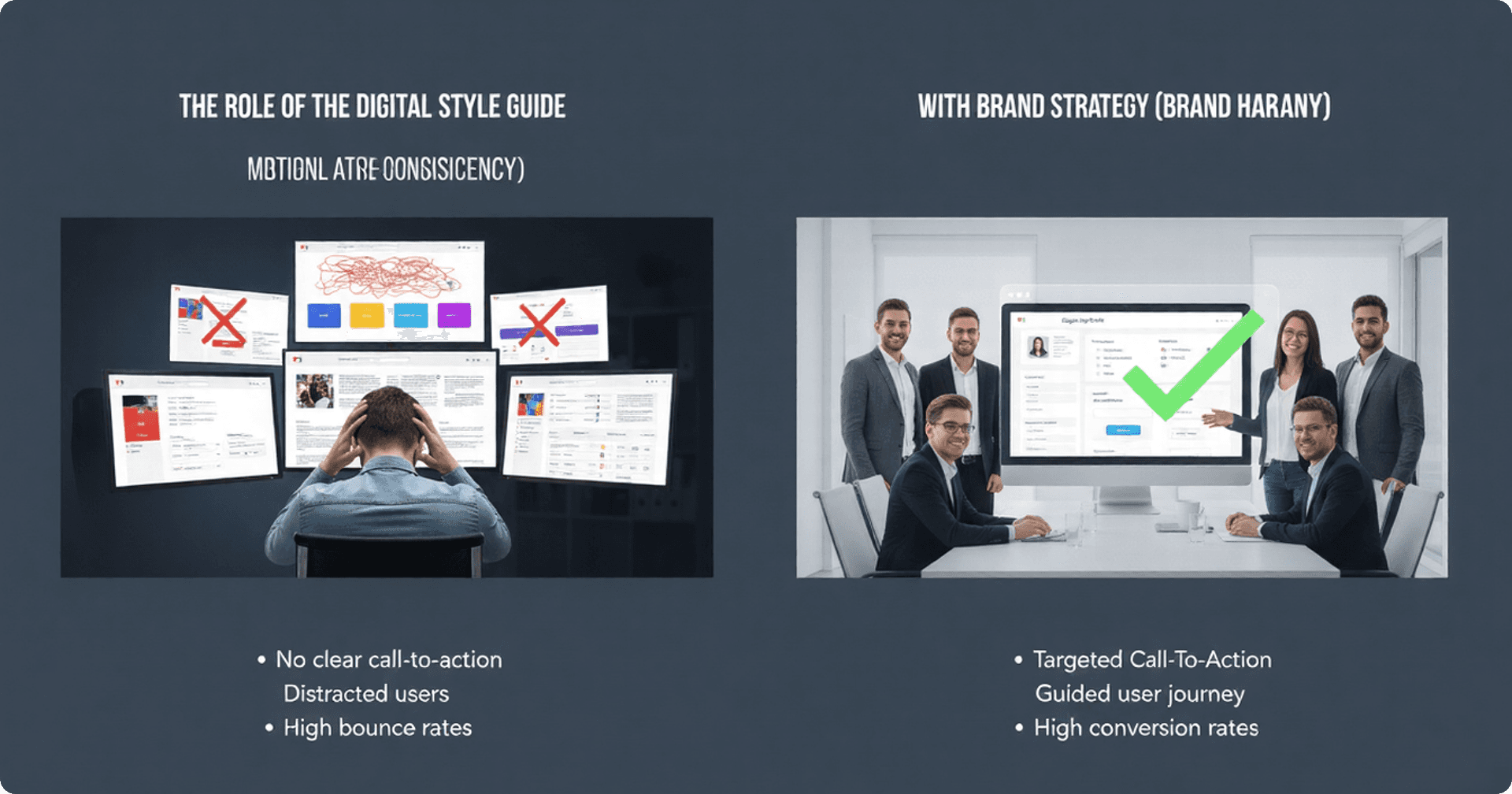
The Role of the Digital Style Guide
Our UI/UX process creates a robust Digital Style Guide (or a small Design System) that acts as the keeper of your brand
Color Codes: Precise hex codes for every primary and secondary brand color.
Typography Hierarchy: Rules for H1, H2, body text, and button text across all devices.
Component Library: Reusable elements (buttons, cards, forms) that ensure every new page feels like your brand.