Are you a small business owner or personal brand looking to elevate your digital presence and drive real growth? You understand that great design isn't just a luxury—it's a critical component of conversion. But when you start researching professional UI/UX design agencies, the first question that pops up is often the most confusing: How much does it really cost?
It’s true that the price for UI/UX services can swing wildly, ranging from a few hundred dollars on a freelance platform to six figures from a large corporate agency. This article cuts through the confusion. We'll break down the factors that influence the total cost of a UI/UX project in 2026, giving you a clear budgeting roadmap to ensure your investment delivers maximum Return on Investment (ROI).
The Biggest Factors Driving UI/UX Agency Costs
Before diving into specific price ranges, it’s vital to understand the four core variables that define the scope and, consequently, the price of any UI/UX project.
1. Project Scope and Complexity
This is the single largest determinant of cost. The needs of a simple five-page marketing website are fundamentally different from a complex Software as a Service (SaaS) application.
Simple Scope (Lower Cost): A redesign of a small business landing page or a simple company website (5–10 pages). Focus is on visual polish and minor interaction improvements.
Medium Scope (Mid-Range Cost): A full website overhaul (revamp) with custom integrations, e-commerce functionality, or a complex user journey (e.g., a booking system).
High Scope (Premium Cost): Designing a large-scale product like a mobile app, a multi-featured SaaS platform, or an enterprise-level dashboard. These projects require intricate system design and comprehensive user testing.
2. The Depth of Research and Strategy
A cheap project skips this step entirely. A high-value agency like Orbo Studio dedicates time upfront to strategic work—and this time is reflected in the cost.

Low Cost: No research. The agency designs based on assumptions or client preference. (High risk of failure).
High Value: Includes dedicated phases for competitive analysis, user persona creation, user journey mapping, and stakeholder interviews. This strategic clarity reduces costly revisions later and ensures the final product is market-tested.
3. Deliverables and Development Hand-off
The cost depends not only on the design files themselves but also on the documentation and readiness for development.
Design Only: Figma/Sketch files and a simple style guide.
Design System: A comprehensive library of reusable components, which speeds up future development and scales the product. This requires more upfront work but saves significant time and money long-term.
Hand-off & Development: Does the agency just hand off files, or do they also provide clean, modern, fully developed code? Our focus on Framer Development means we deliver production-ready assets, minimizing friction and cost between design and launch.
4. Agency Location and Expertise
Agencies in major tech hubs (like San Francisco or London) carry massive overhead. A globally-distributed, boutique agency like Orbo Studio often provides comparable or superior expertise without the prohibitive costs. You are paying for the quality of the team, not the postcode of their office.
Typical Cost Breakdown for Small Business UI/UX Projects
To help you create a realistic budget, we’ve segmented the typical range for specific project types, reflecting the level of quality and strategic depth that drives conversion and trust.
Project Type Scope and Target Estimated Price Range (USD)UX Audit & Strategy Target: Businesses with an existing site but poor conversion.
$500 – $1,000 High-Converting Landing Page Target: Startups, Personal Brands. Includes research, 1-3 key designs, and Framer prep.
$1,000 – $2,000 Website Revamp (Full 10-15 Pages)Target: Established small businesses needing modern UI/UX to attract new clients.
$2,000 – $5,000 Small App/SaaS Minimum Viable Product (MVP)Target: Tech startups. Design of 5-8 key user flows/screens and a basic design system.
Note: These ranges reflect a strategic, full-service approach. If you see quotes significantly lower than these for comparable work, be cautious. It often means corner-cutting on critical research or offering inflexible templates.
The Real Cost-Saving Secret: Prioritizing Strategy
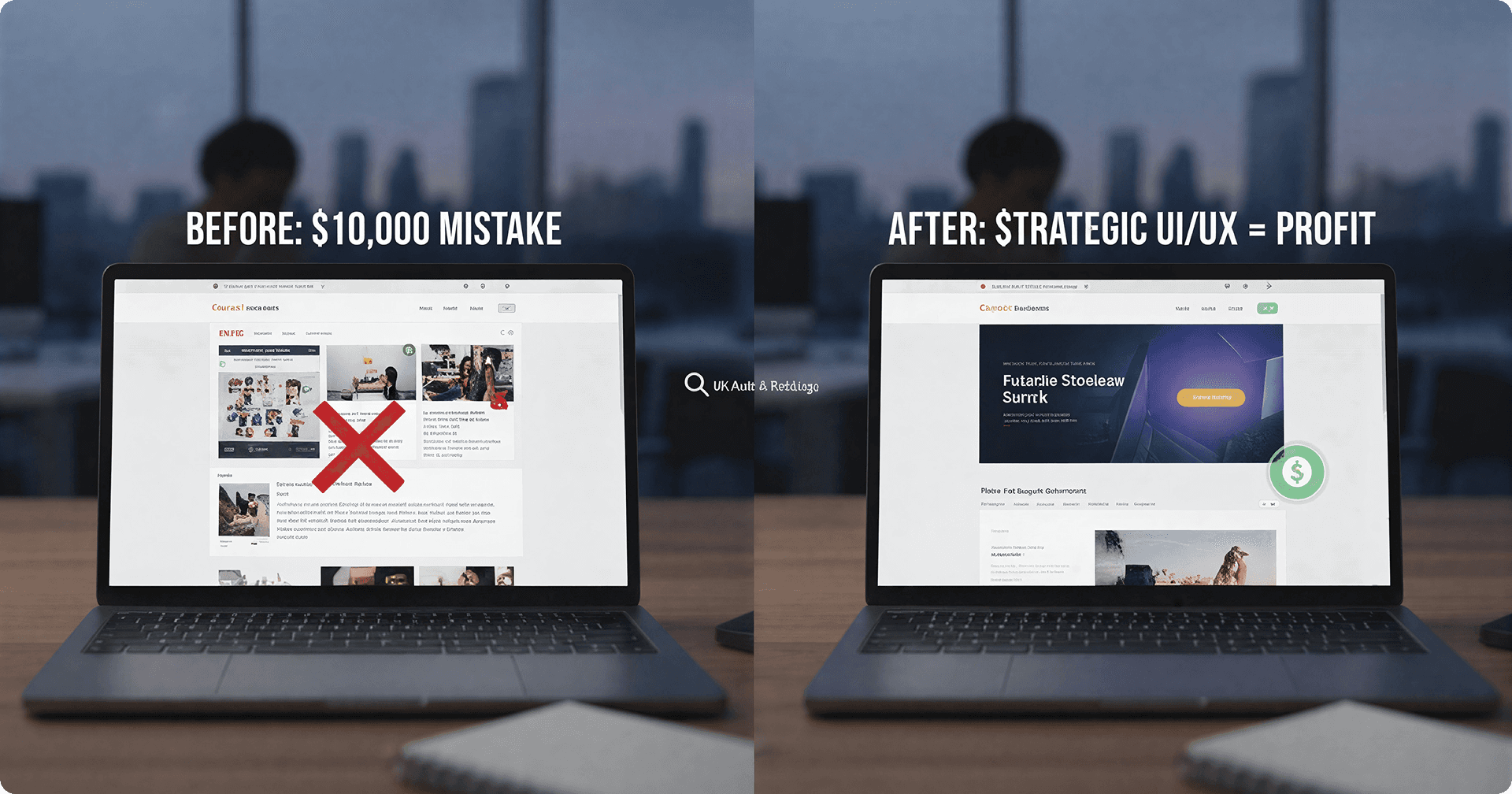
Many small businesses make the mistake of asking for "just a beautiful website." A high-value agency understands that the most expensive part of a project isn't the design; it's redoing a failed design.
By focusing on an intensive upfront Research and Strategy Phase, you make the design process smoother, faster, and dramatically more effective.
Phase 1: Research & Discovery (The Non-Negotiable Foundation)
This phase accounts for roughly 15–25% of the total budget but provides 80% of the long-term value.
Activities: User interviews, defining competitive differentiators, creating information architecture (site map), and detailed wireframing.
Investment Rationale: This step ensures the final design doesn't just look nice, but perfectly guides your target user toward a conversion goal.
Phase 2: User Interface (UI) Design
This is where the visuals come to life. The cost here depends heavily on the level of polish, custom illustration, and animation needed.
Activities: High-fidelity mockups, custom iconography, prototyping interactions, and building out the Design System (style guide).
Key Focus: Ensuring the UI follows modern accessibility standards and is optimized for both desktop and mobile use.
Phase 3: Framer Development & Hand-Off
Orbo Studio differentiates itself by providing a clean path to launch, specifically leveraging modern, high-performance tools like Framer.
Activities: Converting approved Figma designs into a clean, performant, and responsive Framer website. Comprehensive testing across different browsers and devices.
Investment Rationale: This final step saves you from hiring a separate developer, eliminating communication breakdowns and reducing the risk of a broken final product. Performance equals profit—and Framer delivers industry-leading speed.